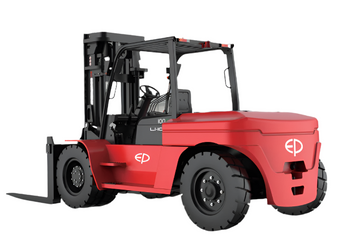


If you are specifying a 20-25 tonne forklift for ports, steel handling, timber yards or precast concrete work, the diesel versus electric decision looks very different at this end of the market than it does for a standard 2-3 tonne warehouse truck. The purchase price gap is real, the duty cycles are brutal, and the wrong choice costs real money over a five or ten year ownership period. This article breaks down where each option wins, using current UK running costs and the EP EFL2503-HV-12 high-voltage electric forklift as a reference point for what the electric side of the market can now do.

Why This Weight Class Used to Be Diesel-Only
For years, anything above 16 tonnes was diesel by default. Electric drivetrains couldn't deliver the sustained torque needed for continuous heavy lifting, and battery technology meant a shift-long duty cycle was unrealistic without swapping batteries mid-shift. That has changed with high-voltage lithium-ion systems.
The EFL2503-HV-12, for example, runs a 618V lithium iron phosphate battery paired with a 135 kW PMSM motor and lifts 25,000 kg at a 1,200 mm load centre. That is genuinely diesel-class performance, and it is why more ports, steel producers and precast concrete plants are now putting electric trucks on the shortlist for applications that were diesel-only five years ago.
That said, diesel still has a place in this weight class, particularly on sites with no charging infrastructure, extended outdoor duty cycles, or genuinely 24/7 multi-shift operation where downtime for charging is not tolerable. The comparison below is about matching the truck to the application, not declaring a universal winner.
Purchase and Finance Cost Differences
Electric trucks in the 20-25 tonne class carry a higher upfront price than an equivalent diesel counterbalance truck. The battery and high-voltage drivetrain are the main reason. Diesel engines and transmissions in this size are a mature, high-volume technology, so the hardware itself is cheaper to manufacture.
Where the gap narrows is at the point of purchase decision, not after it:
-
Finance structures such as hire purchase or contract hire spread the higher electric purchase price over the asset's working life, which softens the initial cash outlay difference.
-
Battery inclusion matters here. Some electric trucks in this class are sold or hired with the battery bundled into the price rather than as a separate purchase, which changes the comparison significantly versus older lead-acid electric fleets.
-
Residual values on lithium-powered heavy trucks are holding up well because buyers increasingly want electric stock, which affects total cost of ownership even if it doesn't show up on the invoice.
If cash flow is the constraint rather than total cost, contract hire on an electric truck often works out closer to a diesel monthly cost than the sticker price difference suggests.
Running Cost Comparison: Fuel vs Electricity
This is where electric earns back its higher purchase price, and the gap is wide enough to matter over a full ownership period.
Diesel. UK diesel is currently averaging around 179p per litre based on government fuel price data. A 20-25 tonne diesel forklift working a full shift under load will burn through fuel at a rate that makes this one of the largest line items in the truck's running costs, and that figure moves with global oil prices, which have been volatile.
Electric. Commercial electricity costs vary by site and contract, but large industrial sites on half-hourly metering are typically paying somewhere in the 15-20p per kWh range, well below the 22-30p range smaller businesses see on standard tariffs. Even at the higher end, the cost per hour of work is a fraction of diesel once you account for the difference in energy density and drivetrain efficiency.
-
No fuel duty, no diesel price volatility exposure.
-
Opportunity charging during natural breaks in a shift keeps the truck topped up without dedicated downtime.
-
Sites with solar or on-site generation can push the running cost gap even further in the electric truck's favour.
The exact saving depends on hours per week, load factor and local electricity contract, but for sites running two or three shifts, fuel versus electricity cost is consistently the single biggest factor tipping the total cost of ownership calculation toward electric.

Maintenance and Servicing
Diesel engines in this weight class need routine oil changes, filter replacements, exhaust system maintenance and the general upkeep that comes with an internal combustion drivetrain doing heavy, repetitive work. Electric trucks strip most of that out.
A high-voltage electric drivetrain like the one in the EFL2503-HV-12 has no engine oil, no fuel filters, no exhaust system and far fewer moving parts subject to wear. Regenerative braking also reduces brake wear compared with a diesel truck under constant heavy load. The trade-off is that lithium battery systems need their own care, though a 5-year battery warranty (as offered on this truck) removes most of the early-life risk from that side of the equation.
Over a multi-year ownership period, lower scheduled maintenance and fewer unplanned breakdowns from drivetrain wear are a genuine cost saving for electric, on top of the fuel saving above.
Regulatory and Compliance Considerations
Whichever drivetrain you choose, the statutory inspection burden is the same. Under LOLER (the Lifting Operations and Lifting Equipment Regulations 1998), forklift trucks require a thorough examination by a competent person at least every 12 months, regardless of fuel type. That obligation doesn't change with electric power, so it shouldn't factor into the diesel versus electric decision itself.
Where drivetrain does matter is diesel exhaust exposure. Diesel engine exhaust emissions are classified by the International Agency for Research on Cancer as a Group 1 carcinogen, and the HSE publishes specific guidance on controlling exposure to diesel exhaust in the workplace. For indoor or partially enclosed sites, or for operations where a diesel truck works in proximity to staff for extended periods, this is a genuine health and safety factor that electric removes entirely. It is one reason more ports and manufacturing sites are pushing electric trucks into roles that were diesel-only a few years ago, even before the cost case is considered.
You can read the HSE's own guidance on this at HSE: Control of diesel engine exhaust emissions in the workplace.
Uptime, Duty Cycles and Application Fit
The honest answer to "which is better" depends heavily on how the truck will actually be used.
Electric tends to suit:
-
Sites with predictable shift patterns and natural breaks for opportunity charging.
-
Indoor, semi-enclosed or mixed indoor/outdoor sites where exhaust exposure and noise matter.
-
Operations wanting to reduce their carbon footprint or meet client sustainability requirements, which is increasingly a factor in ports and manufacturing supply chains.
Diesel still suits:
-
Remote sites with no reliable charging infrastructure.
-
Genuinely continuous 24-hour operation with no natural downtime window.
-
Extreme outdoor environments where charging infrastructure is impractical to install.
The EFL2503-HV-12's standard 4,000 mm lift height, extendable to 8,000 mm, along with its full AC cabin and Grammer suspension seat, shows how far heavy electric trucks have come toward matching diesel on comfort and capability, not just on paper specification.
Total Cost of Ownership: The Real Comparison
Pulling this together, the pattern for most 20-25 tonne applications looks like this:
-
Purchase price: diesel is cheaper upfront.
-
Running costs: electric is significantly cheaper per hour worked, driven by the gap between diesel and electricity pricing.
-
Maintenance: electric costs less to keep running over time.
-
Compliance: LOLER applies equally to both, but diesel carries additional exhaust exposure management under HSE guidance.
-
Site suitability: the deciding factor is often charging infrastructure and duty cycle, not cost alone.
For most multi-shift, semi-continuous operations, the running cost and maintenance savings on electric outweigh the higher purchase price within a few years, particularly once finance is factored in. For genuinely continuous outdoor operations with no charging window, diesel remains the practical choice today.

Talk to iLift About Your Application
Every site is different, and the numbers above will shift depending on your shift pattern, electricity contract and site layout. If you are weighing up a 20-25 tonne truck for ports, steel, timber or heavy manufacturing work, iLift can talk you through whether the EFL2503-HV-12 or a diesel alternative fits your operation, and what hire or finance options are available. Get in touch or browse the High Voltage series to see the full specification.