

Forklift demand in the United Kingdom often comes in waves: peak weeks, short projects, and surprise breakdowns. Renting is widely used because it lets operations scale up for short needs without tying up capital on equipment that may sit idle once the surge passes.
This guide compares short term forklift hire UK with long term forklift rental, focusing on cost flexibility, support, and decision criteria using iLift’s hire approach as a practical reference point. iLift states it offers flexible hire periods “from short-term daily hires to long-term contracts” and can tailor hire for “a day, a week, or several months”.
What changes when the hire term changes
Short hires maximise agility but can amplify fixed costs. In iLift’s own UK hire guidance, transport and administration are highlighted as significant contributors to total cost—one reason very short hires can feel close in price to a longer period once you compare cost per productive shift.
Longer hires typically improve predictability and reduce disruption. iLift describes its rental process as “quick and hassle-free” with a simple enquiry flow (choose truck type, enter rental details, complete enquiry), which becomes easier to manage when you are not repeating it every few days.
Safety obligations stay the same whichever term you pick. Health and Safety Executive notes lift trucks are “particularly dangerous” and that poor training and supervision are common contributors to accidents—so hire-term decisions should sit alongside training, supervision, and traffic controls.

Short-term forklift hire UK
Short hire is best when your need is clearly time‑boxed and you value flexibility over commitment. iLift explicitly offers one‑day rentals (with sufficient advance booking) and broader short-term hire, which suits peak-week throughput surges, short projects, and bridging gaps while a truck is repaired or replaced.
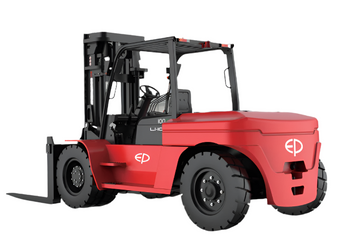
Short hire is also the fastest way to validate specification. If you are unsure about lift height, aisle width, turning space, or truck type, a short trial reduces the risk of committing to the wrong class of equipment. iLift’s hire page emphasises it can supply multiple truck types (including counterbalance, reach trucks, order pickers and stackers) and that models span different capacities and lift heights.
The main downside is efficiency at the margins. If utilisation is low or the job finishes early, fixed delivery/admin costs dominate and the cost per productive hour rises—one reason iLift notes that a one‑day hire can be close in cost to a week once transport and administration are factored in.
Long-term forklift rental
Long-term hire usually suits steady operations where the forklift becomes part of the baseline workflow. In iLift’s “hire or buy” guidance, long-term hires are explicitly linked with lower daily rates and predictable payments, which can be useful for weekly or monthly budgeting.
Continuity is a practical advantage as well as a cost one. When operators use the same truck consistently, familiarisation is easier to manage and performance tends to be steadier over time; this aligns with HSE’s emphasis on structured training including a specific “familiarisation” stage as part of safe lift-truck operation.
The trade-off is commitment risk. If demand falls or a project ends early, you can pay for unused capacity, which is why iLift highlights checking duration terms (including extensions and early termination) as a core part of evaluating a hire contract.
Costs, flexibility, and support
Comparing hires on weekly price alone can be misleading. iLift’s UK market guidance reports that hire and leasing costs vary widely by truck size and power source, giving indicative ranges (for example, weekly hire rates starting around £100–£150 for light electric forklifts, rising for larger trucks). Treat these as directional benchmarks—your actual rate depends on specification, location, and duration.
To keep comparisons grounded, iLift’s contract checklist points to five areas that most affect total cost: specification/capacity, duration, payment schedule, maintenance/service, and insurance/liability. This is where short hire can hide repeat fees (delivery each time), and long hire can hide lock‑in (early termination costs). [9]
Support expectations should be checked explicitly—not assumed. iLift’s hire page states it provides “full support throughout your rental” with “fast on-site assistance” and that it stocks parts to minimise downtime.
Delivery and readiness also matter, especially for short hires where losing half a shift can erase the value of the hire window. iLift states delivery is included and handled by its specialist transport team, aiming to deliver safely and on time with minimal disruption.
Finally, keep servicing separate from statutory checks. HSE is clear that a thorough examination is required for industrial lift trucks under health and safety law (LOLER and PUWER) and that routine servicing or preventive maintenance is not the same as a thorough examination.
Compliance and safety responsibilities that don’t rent out
Even when the truck is hired, UK law expects lifting operations to be planned and supervised by competent people and carried out safely. HSE’s LOLER overview emphasises planning and supervision and notes duties around ensuring equipment is fit for purpose and subject to statutory checks, with records kept and defects reported.
HSE also sets minimum thorough examination intervals when no written scheme specifies otherwise: typically 12 months for most lifting equipment, with 6 months applying to lifting accessories and equipment used to lift people. HSE further notes that examination and inspection records should be available (including when equipment leaves your undertaking under hire or use elsewhere), which matters if hired trucks move between sites.
Defect reporting matters in hire situations. HSE indicates that where defects are identified, they should be reported to the person using the equipment and also to any person from whom it has been hired or leased (as well as, in some cases, the enforcing authority).
To reduce compliance gaps, many businesses use recognised inspection frameworks. CFTS explains that a “true” Thorough Examination should cover both LOLER and PUWER elements, and UKMHA technical guidance describes CFTS as a national accreditation scheme enabling combined Thorough Examination (LOLER) and inspection (PUWER).
Operator training is essential regardless of rental duration. HSE guidance states employers should not allow lift-truck operation without basic training and testing, and describes a three-stage structure including basic training, job-specific training and familiarisation.

Pallet trucks available from iLift
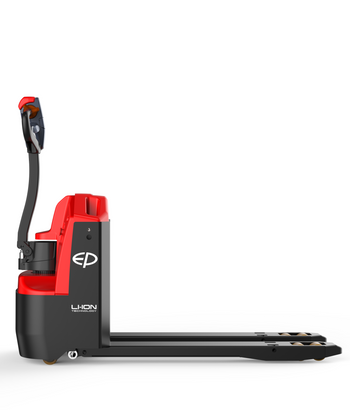
Forklift hire is often cheaper and faster when you split tasks: forklifts for stacking and lorry work; pallet trucks for high-volume ground‑level moves. iLift’s electric pallet truck range can be bought or rented, and iLift states that any electric pallet truck it has for sale can also be rented.
Current examples from iLift’s range include: - F Series pallet trucks (1,500 kg) with hire listed from £60 per week (ex VAT).
- WPL202 (2,000 kg) with hire listed from £180 per week (ex VAT), with iLift listing a 24V/100Ah lithium battery and integrated charger.
- EPT WA Series (2,000–2,500 kg) with hire from £150 per week (ex VAT) and purchase pricing shown from £6,000 (ex VAT).
Where you want manufacturer context, EP Equipment describes the F4 as a compact 1.5‑ton lithium pallet truck with flexible removable battery options, and highlights the WPL202 as using a 24V/100Ah Li‑ion battery and integrated charger designed to support opportunity charging for uptime.
For many sites, compliance details matter as much as price. iLift states its pallet trucks are LOLER certified and inspected by an accredited engineer before being listed for sale or rent, and it also notes it can support maintenance and repairs for pallet trucks and wider forklift fleets.
If you use high‑lift pallet trucks, note that inspection expectations can change with lift height. British Safety Council notes pallet trucks lifting above 300 mm should have a Thorough Examination under LOLER and be inspected under PUWER, while pallet trucks lifting below 300 mm are not subject to LOLER but still need inspection under PUWER.
Reduce Costs with the Right Forklift Rental Plan
To choose the right term quickly, map the job in three numbers: weeks needed, expected operating hours per shift, and the cost of downtime. Then decide whether you are optimising for agility (short hire) or predictability and unit cost (long hire). iLift states it can tailor hire length from daily to longer contracts and provides support throughout the rental period.
To get started, use iLift’s online hire enquiry process to select a truck type and enter your rental dates and site details. If most movement is floor-level pallet transfer, browse iLift’s electric pallet truck range and add the right model for your routes. For a quote or quick advice, call 01600 800 800 or email enquiry@ilift.co.uk.