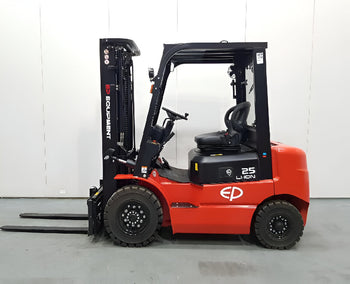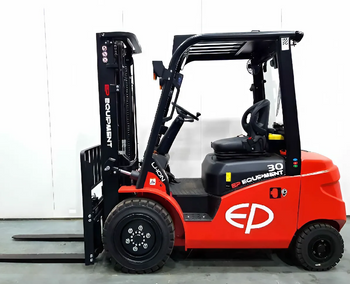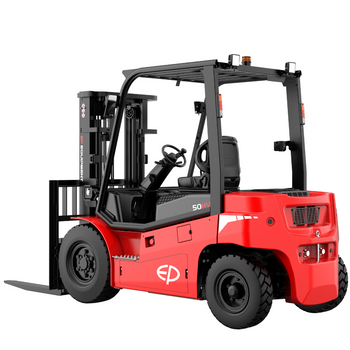


For decades, multi-shift warehouses have built entire layouts around one inconvenient fact: lead-acid forklift batteries need a dedicated room. Opportunity charging forklift technology, made possible by lithium-ion power, has quietly removed that requirement altogether. No swap crane, no ventilation system, no spare batteries lined up on racks. Just a charger near the dock, plugged in during a break, and a truck that's ready to go again in minutes.
This guide explains exactly how opportunity charging works, why it's only practical with lithium-ion, and what it means for warehouses still planning around a battery room that may no longer need to exist.
What Is Opportunity Charging?
Opportunity charging is the practice of recharging forklift batteries during natural pauses in the workday, such as breaks, shift changes, or lunch periods, rather than waiting for a full discharge. Instead of running a battery down to a set level before committing to a full charge cycle, the truck is plugged in whenever a gap in operations allows, and unplugged the moment it's needed again.
A 15-minute charge can provide up to an hour of additional run time. A 1-hour charge can get a battery back to 80% capacity. Over the course of a shift, several of these short top-ups keep a forklift running continuously without ever needing to swap the battery or take the truck out of service for an extended period.
Why Opportunity Charging Only Really Works with Lithium
Opportunity charging is technically possible with lead-acid batteries, but the chemistry actively works against it.
Lead-acid batteries work on a different principle entirely. They need a full charge cycle, start to finish, followed by time to cool down before going back into service. That's not a preference, it's how the chemistry works. When you interrupt that cycle repeatedly with partial charges, the electrolyte solution inside the battery starts to behave unevenly, with acid and water separating in a process called stratification.
When utilising opportunity charging with a lead-acid battery, you can experience downsides like reduced battery life and increased maintenance requirements. The very thing that makes opportunity charging valuable, frequent short top-ups, is precisely what shortens a lead-acid battery's working life.
Lithium-ion batteries have no such limitation. Lithium-ion batteries don't care about partial charges. You can plug in for 20 minutes, unplug when the truck is needed, plug back in two hours later, and the battery handles all of it without issue. There's no damage from interrupted cycles, no cool-down period required, and no minimum discharge level before you can charge again.
That flexibility is the whole point of lithium-ion in a multi-shift environment: fast charging, no swap required, and no penalty for plugging in whenever the opportunity exists.
Why Partial Charging Actually Helps Lithium Batteries
This is the detail that surprises most people coming from a lead-acid background: partial charging isn't just tolerated by lithium, it's beneficial. Lithium-ion batteries do not need to receive a full charge and have no risk of sulfation due to their internal chemistry. In fact, their lifespan is optimised when they are not fully charged, and they do better with opportunity charging. They do not need a complex voltage setup to avoid damage during the charging process, and do not require an equalisation charge either.
This flat relationship between partial charging and battery health is the foundation that makes the battery room obsolete.
The Battery Room Problem: Why It Existed in the First Place
To understand why eliminating the battery room is such a significant change, it helps to understand why it was ever necessary.
Hydrogen Gas and Ventilation Requirements
In a traditional setup, a dedicated, ventilated battery room is needed because lead-acid batteries emit dangerous hydrogen gas while charging. This is a genuine safety hazard. Hydrogen is flammable and explosive at relatively low concentrations, which is why lead-acid charging areas require forced ventilation, gas detection, and strict access controls.
Heavy Lifting Equipment for Battery Swaps
Lead-acid batteries require heavy cranes to swap them out, and forklift batteries weigh thousands of pounds, requiring special lifting equipment to be removed from the equipment for charging. This means dedicated swap stations, hoists, and trained personnel to handle batteries that can weigh close to a tonne, all of which represents capital cost, floor space, and ongoing risk of manual handling injury.
Watering, Equalisation, and Specialist Maintenance
Lead-acid batteries require watering, the process of topping up cells with distilled water to prevent damage. They also need equalisation charges to balance the chemistry. If a team forgets to water a battery, it can be ruined in weeks, costing thousands. A battery room exists partly to contain this maintenance burden in one controlled space, with the right ventilation, drainage, and specialist staff on hand.
Lithium removes all three of these requirements simultaneously. Lithium batteries are sealed units. No watering, no acid, no cleaning. You plug them in and you walk away

What Opportunity Charging Looks Like in Practice
In a lithium-powered operation, charging infrastructure looks completely different from a legacy battery room. Operators can plug the truck into a charger located near the breakroom or loading dock whenever they have a spare 10 minutes.
A typical setup might include:
-
Wall-mounted or pedestal chargers positioned at natural pause points: loading docks, break areas, shift handover zones
-
A BMS-managed charging profile, where the battery management system dynamically adjusts charging rates based on cell temperature and state of charge, removing any need for manual monitoring
-
No dedicated room, since eliminating a separate charging room allows a company to reclaim warehouse space that would otherwise sit unused for anything except battery storage
Modern LiFePO4 systems achieve 95% charge efficiency, wasting minimal energy as heat compared to lead-acid's 70 to 80%, which also means chargers run cooler and require less ventilation infrastructure even where charging points are clustered together.
The Real Business Case: Uptime and Cost
The case for opportunity charging isn't really about charging technology. It's about what the warehouse stops losing once battery swapping disappears.
One major equipment manufacturer calculated a cost of $4,800 every single day due to lost productivity from having to swap out lead-acid batteries twice per shift. After switching to lithium-ion, they were able to work opportunity charging into their daily processes and ended up saving over $1 million every year by reclaiming that lost productivity.
Beyond the headline saving, the operational benefits compound:
-
No spare battery inventory required to support a swap rotation across multiple shifts
-
No dedicated swap personnel or hoist equipment to maintain and insure
-
Reclaimed floor space that previously held the battery room, swap station, and battery storage racks
-
Reduced manual handling risk from no longer moving thousand-pound battery units between truck and charging area
-
Consistent power delivery, since lithium-ion batteries deliver maximum power at all times, regardless of how much charge is left, unlike lead-acid, which loses power as it depletes through the shift
When Opportunity Charging Works Best
Opportunity charging is particularly well suited to:
-
Multi-shift operations without swap infrastructure, where running two or three shifts with a battery swap programme means spare batteries, a charging room, watering equipment, and someone managing the whole rotation. Lithium-ion plus opportunity charging removes most of that overhead entirely.
-
Facilities with predictable downtime windows, such as dock waits, shift handoffs, and lunch breaks, where charging stations placed nearby let operators plug in without affecting workflow at all.
-
Cold storage environments, with one important caveat: a cold-specified lithium battery with an integrated heating system is essential, since lithium batteries can struggle to charge in sub-zero temperatures without active thermal management.
Getting the Setup Right
A successful transition to opportunity charging is about more than simply switching to lithium batteries. Charger placement matters: stations need to sit at genuine pause points in the workflow, not just wherever floor space allows. Charging profiles should be matched to your shift pattern and Amp-hour requirements, particularly for 24-hour operations where the truck needs to handle the workload between opportunity charges. iLift's EP lithium-ion electric forklifts are built around this principle, with batteries and BMS technology designed specifically for frequent partial charging without degradation, backed by a 5-year battery warranty as standard.
If you're currently running a lead-acid fleet and want to understand what switching to opportunity charging would mean for your battery room, your shift patterns, and your total running costs, we're happy to help you work through it. Browse the EP electric forklift range or get in touch with the iLift team to discuss your operation.

FAQ: Opportunity Charging for Forklifts
Can lead-acid batteries use opportunity charging?
Technically yes, but it isn't recommended. Lead-acid chemistry depends on full charge cycles followed by a cooldown period. Interrupting that cycle repeatedly with partial charges causes stratification and accelerates battery degradation, leading to reduced battery life and increased maintenance.
How often can I charge a lithium forklift battery?
As often as operationally convenient. Lithium-ion batteries have no minimum discharge requirement and no memory effect, so they can be plugged in for short top-ups multiple times per shift without any negative impact on lifespan.
Do I still need a battery room with lithium forklifts?
No. Lithium-ion batteries are sealed units that don't emit hydrogen gas during charging and don't require watering or equalisation. This removes the core safety and maintenance requirements that made a dedicated battery room necessary for lead-acid fleets.
How long does an opportunity charge take?
A short top-up of around 15 minutes can add roughly an hour of run time, while a full hour of charging can typically restore a lithium battery to around 80% capacity. Exact figures depend on the battery's Amp-hour rating and the charger output.
Does opportunity charging shorten a lithium battery's lifespan?
No. Lithium-ion batteries are designed for this charging pattern. In fact, avoiding full discharge and full charge cycles in favour of partial top-ups can extend overall battery lifespan compared to a traditional single daily charge cycle.
Rethinking the Charging Room
Opportunity charging forklift technology, powered by lithium-ion batteries, has made the dedicated battery room an optional piece of infrastructure rather than a operational necessity. No swap cranes, no ventilation systems, no watering schedules, just a charger near the breakroom and a fleet that never really stops.
If you'd like to talk through what this could mean for your warehouse layout, your shift patterns, or your next fleet upgrade, get in touch with the iLift team and we'll help you find the right setup.