

If your business uses forklifts, LOLER inspection forklift compliance is not optional. The Lifting Operations and Lifting Equipment Regulations 1998 (LOLER) set out clear legal requirements for how often your equipment must be examined, who is responsible for arranging it, and what happens if you don't. Yet the HSE consistently identifies forklift LOLER compliance as one of the most frequent gaps in UK workplace inspection programmes, particularly around fork arms and the split of duties between owners and hirers.
This guide explains exactly what LOLER requires for forklifts, who holds the duty, what an examination actually covers, and what you can expect to pay.
What Is a LOLER Thorough Examination?
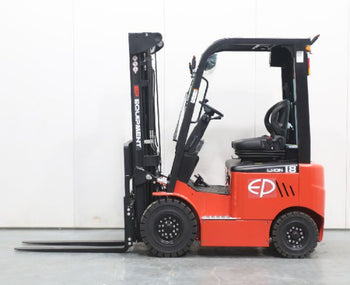
A LOLER thorough examination is a statutory safety assessment carried out by a competent person, focused on the lifting-specific components of a forklift. It is not a service, and it is not the same as a daily pre-use check. A service covers maintenance items such as oil, filters, tyres, and brakes to keep the forklift working. A LOLER thorough examination assesses whether the forklift is safe to continue lifting, covering the mast, forks, chains, hydraulics, load-bearing structure, and capacity plate.
The same engineer can carry out both, but they are legally separate activities and must be documented separately.
What Does an Examiner Actually Check?
During a forklift thorough examination, a competent person will assess:
-
Mast and carriage assembly: visual and operational inspection of mast channels, rollers, carriage plate, tilt cylinder pins and bushes, and chain anchor points
-
Fork arms: blade thickness at the heel (forks must be discarded if worn beyond 90% of original thickness), cracks, straightness, locking pin engagement, and wear on mounting hooks
-
Lift chains: chain wear measurement and elongation check, with discard at 3% elongation
-
Hydraulic system: cylinder condition, hose integrity, valve operation, and a leak check, given that rapid pressure loss can be disastrous
-
Load backrest and overhead guard: structural condition and security
-
Attachments: any fitted sideshift, fork positioner, or extension examined for condition and safe working load markings
-
Capacity plate: confirming the plate reflects the truck's actual configuration, including any attachment derating
The examiner produces a written Schedule 1 Report of Thorough Examination (ROTE) after every inspection. This is a legal document, not an advisory note. It must be issued to the duty holder as soon as practicable and retained on file, as it must be available to HSE inspectors at all times.
How Often Does a Forklift Need a LOLER Inspection?
Lifting accessories and equipment used to lift persons must be examined every 6 months, while other lifting equipment requires examination at least every 12 months.
For forklifts, this plays out as follows:
-
Standard counterbalance and reach forklifts used only to lift loads: thorough examination every 12 months as a minimum
-
Man-riding forklifts (order pickers, mast-climbing platforms where the operator rides up with the load): thorough examination every 6 months
-
Fork arms: classified as lifting accessories, not part of the forklift itself, and therefore require a separate examination every 6 months regardless of the truck's 12-month cycle
This last point is the compliance gap that catches the most businesses out. The HSE consistently identifies forklift LOLER compliance as one of the most frequent gaps in workplace inspection programmes, particularly the fork arms, which are technically lifting accessories and require a separate 6-monthly examination.
A forklift with an up-to-date 12-month certificate but no 6-monthly fork arm examination is not fully LOLER compliant.
Can the Interval Be Changed?
Yes, but only in specific circumstances. A competent person can set a different examination interval using a written examination scheme, which must be in place before the equipment goes into service. Heavily used equipment, harsh environments, or previous defects may justify a shorter interval. The competent person makes that call at examination and notes it on the report.
Who Is Responsible for LOLER Compliance?
This is the area most misunderstood by businesses that hire rather than own their forklifts.
The employer, owner or duty holder is legally responsible. The duty applies even when the equipment is hired in rather than owned, so if you operate it, you are responsible for making sure it is examined, safe and used correctly.
In practice, for owned forklifts, the duty falls entirely on the owner. For hired forklifts, responsibility is shared:
The hire company is responsible for: providing equipment with a valid thorough examination certificate at the point of hire, and managing subsequent examinations that fall within the hire period.
You as the hirer are responsible for: ensuring operators are trained and competent, carrying out daily pre-use checks, planning lifting operations safely, keeping the forklift within its rated capacity, and ensuring the examination does not lapse during your hire period.
If a hire period extends beyond 12 months, a further thorough examination will be required before the equipment continues in service. If you are not certain whether your hire company is managing examination scheduling, confirm it in writing before an examination lapses on your watch.
A breach of LOLER is a criminal matter. The responsibility sits with the duty holder even when the equipment is hired in rather than owned.
Who Can Carry Out a LOLER Examination?
The examination must be carried out by a competent person with sufficient knowledge and experience of forklift mechanics and LOLER requirements, and who is independent of the maintenance of that equipment. In practice, most businesses use independent forklift engineers or their supplier's examination service.
CFTS (Consolidated Fork Truck Services) is the recognised accreditation scheme for forklift thorough examinations in the UK. Using a CFTS-accredited examiner gives you confidence that the inspection has been carried out to a recognised industry standard and that the resulting certificate will hold up to HSE scrutiny.

What Does a LOLER Forklift Inspection Cost?
LOLER inspection costs vary depending on the supplier, your location, the number of trucks, and whether examinations are scheduled as part of a service contract or booked individually.
Forklift trucks typically cost £50 to £100 per examination. However, this is the lower end of what businesses actually report paying. £150 to £300 plus VAT is about the range you should expect for LOLER on a forklift, not including servicing, with the lower end achievable if the tester can schedule in with other customers in your area.
For businesses with multiple trucks, bundled contract rates are almost always more cost-effective than booking individually. Scheduled or contract clients benefit from bundled rates and priority booking.
Fork arm examinations, which must be carried out every 6 months as lifting accessories, are typically priced separately and at a lower rate than the full truck examination, given the shorter scope. Confirm with your examiner whether the fork arm 6-monthly examination is included in any bundled quote, or whether it is an additional line item.
The Hidden Cost of Non-Compliance
The examination cost is modest relative to the consequences of getting it wrong. If a forklift fails a LOLER examination, it must be immediately withdrawn from service and cannot be used until all identified issues are corrected and a follow-up examination is passed. Unexpected downtime, emergency repair costs, and disruption to operations far exceed the cost of staying on top of scheduled examinations.
Beyond operational disruption, failure to comply with LOLER regulations can result in prosecution, fines, or the equipment being taken out of use. In the event of a serious workplace accident involving a forklift with a lapsed LOLER certificate, the liability position for the duty holder is severe.
LOLER vs PUWER: Understanding the Difference
Forklift compliance sits under two sets of regulations that are often named together but cover different ground.
LOLER governs lifting-specific requirements: the thorough examination schedule, lifting operation planning, and the competency of those involved in lifting.
PUWER (Provision and Use of Work Equipment Regulations 1998) governs the broader safe use, maintenance, and suitability of all work equipment, including forklifts. PUWER requires that operators are trained, that the equipment is maintained in good repair, and that it is appropriate for the task.
Both apply to forklifts simultaneously. Meeting your LOLER obligations does not discharge your PUWER duties, and vice versa. The HSE's Approved Code of Practice L117, covering rider-operated lift trucks, sets out the practical steps for compliance across both regulations.
How to Stay on Top of LOLER Compliance
The most common compliance failure is not a deliberate one. It is simply losing track of examination dates across a fleet, particularly when fork arms require 6-monthly examination on a different cycle to the truck itself. A simple calendar-based reminder system, set 11 months after each truck examination and 5 months after each fork arm examination, is often enough to prevent lapses.
For businesses with multiple forklifts, a written examination scheme drawn up by your competent person formalises the schedule and removes ambiguity about when each truck and each set of forks is next due.
LOLER Compliance with iLift Service Plans
iLift's service and maintenance packages for EP electric forklifts include scheduled LOLER thorough examinations as standard, carried out by qualified engineers with full documentation provided after each visit. Whether you have a single truck or a multi-site fleet, our team manages your examination scheduling so nothing lapses and your compliance records are always in order.
If you're unsure whether your current forklifts are LOLER compliant, or want to discuss building examinations into a service contract, we're happy to help. Contact the iLift team or find out more about our service and maintenance packages.

FAQ: LOLER Inspections for Forklifts
Does a LOLER inspection include a service?
No. A LOLER thorough examination and a forklift service are legally separate activities. A service covers maintenance items to keep the truck running. A thorough examination is a safety assessment of lifting-specific components. The same engineer can carry out both on the same visit, but each must be separately documented.
What happens if my forklift fails its LOLER inspection?
It must be immediately withdrawn from service. It cannot be used until all identified defects are rectified and the truck passes a follow-up examination. The examiner's Schedule 1 report will specify whether the defect requires immediate action or can be addressed at a future date.
Do I need LOLER if I hire my forklift?
Yes. Hiring a forklift does not remove your compliance obligations as the operator. You remain responsible for operator training, daily checks, and ensuring the examination does not lapse during your hire period. Confirm in writing with your hire company who is managing examination scheduling.
Are fork arms covered by the same LOLER inspection as the forklift?
No. Fork arms are classified as lifting accessories and require a separate thorough examination every 6 months, regardless of the truck's 12-month examination cycle. This is the most common compliance gap the HSE identifies in forklift LOLER programmes.
How long should I keep LOLER records?
Reports on lifting accessories are kept for two years. Reports on lifting equipment are kept until you stop using that equipment. All records must be readily available to HSE inspectors.
Staying Compliant Is Simpler Than It Looks
LOLER inspection forklift compliance comes down to knowing your examination intervals, understanding who holds the duty in your specific situation, and not letting fork arm examinations slip through the gaps. The costs are modest, the documentation requirements are straightforward, and the risk of non-compliance is significant.
If you need any support with LOLER compliance for your EP forklifts, whether that's understanding your obligations, arranging an overdue examination, or building inspections into an ongoing service plan, the iLift team is here to help. Get in touch with us today and we'll make sure your compliance is in order.