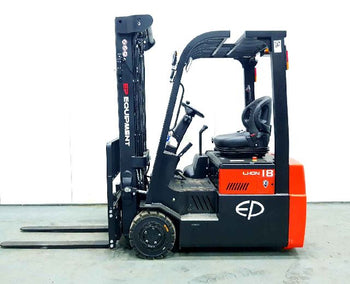


Electric forklifts are the workhorses of modern warehouses and logistics centers, but their productivity depends entirely on the battery that powers them. Two dominant battery chemistries lead‑acid and lithium‑ion offer very different experiences in charging, maintenance, uptime, safety and long‑term cost. This guide explains how the two technologies work, highlights their advantages and limitations and offers guidance for choosing the best option when hiring or renting a forklift. Wherever possible it references published data and independent studies rather than marketing claims.
How Lead‑Acid and Lithium‑Ion Forklift Batteries Work
Lead‑acid batteries have been used in forklifts since the late 19th century. They produce electricity by immersing lead plates in sulfuric acid. Their flat‑plate or tubular‑plate designs are simple and robust, but their chemistry limits energy density, charging speed and overall lifespan. A properly maintained lead‑acid battery typically lasts for around 1 000 to 1 500 charge cycles, or three to five years. Because charging generates heat, lead‑acid batteries require long rest periods after charging and must be watered and equalized regularly to remain healthy.
Lithium‑ion batteries store energy using lithium compounds with far greater energy density. The dominant chemistry for forklifts is lithium iron phosphate (LiFePO4), which pairs a long service life with inherent thermal stability. A lithium‑ion battery can deliver 2 000 – 5 000 cycles and provide eight to twelve years of service. These batteries are sealed units with integrated battery‑management systems (BMS) that monitor individual cell voltages, temperatures and charge levels. Because they do not rely on liquid electrolyte reservoirs, they are maintenance‑free and emit no harmful gases.
Energy Efficiency and Charging Time
Energy efficiency and charging speed determine how quickly a battery returns to service and how many spare batteries are required for multi‑shift operations. Lead‑acid batteries convert only 70 – 80 % of the electricity they draw into usable energy. They need 8 – 12 hours to fully charge and must then cool for another 6 – 8 hours before being safely returned to service. Fast charging or “opportunity charging” (topping up during breaks) reduces lead‑acid battery life and should be avoided.
Lithium‑ion batteries convert 95 – 99 % of incoming electricity into stored energy, dramatically reducing energy bills and waste heat. They typically reach full charge in one to three hours. Unlike lead‑acid units, lithium‑ion batteries thrive on short, frequent top‑ups; a 15–30‑minute charge during a tea break or meal can add several hours of runtime without harming the battery. Since they do not overheat during charging, lithium‑ion batteries can return to service immediately after charging without a cooling period. For operations requiring multiple shifts or continuous use, this rapid turnaround eliminates the need for spare batteries and frees up valuable warehouse space previously dedicated to charging bays.
Maintenance Requirements
Maintenance is the hidden cost of lead‑acid batteries. To prevent sulfation, operators must refill the electrolyte with distilled or deionised water, typically weekly in summer and bi‑weekly in winter. They must also perform equalization charges once a month to balance cell voltages and remove sulfate crystals. Terminals need cleaning and inspections for corrosion, and charging rooms must be well‑ventilated due to hydrogen gas emissions. This maintenance regimen not only consumes staff time but also imposes direct costs; professional battery‑top‑up services can cost around £235 per battery per year, and installing heated charging rooms for cold‑storage operations can add £5 000–£10 000 plus operating costs.
Lithium‑ion batteries, on the other hand, are essentially maintenance‑free. They are sealed units, so no watering, equalization or terminal cleaning is required. The built‑in BMS equalises the cells automatically and protects against over‑charging, deep discharging and overheating. Lithium‑ion batteries operate reliably across a wide temperature range (–20 °C to 45 °C) and lose only 15 – 20 % of capacity at 0 °C. They also do not require dedicated charging rooms; they can be safely charged at any convenient location in the warehouse, freeing up space for productive use.
Safety and Workplace Environment
Safety is a critical consideration, particularly in busy warehouses. Lead‑acid batteries can spill sulfuric acid, exposing operators to burns and requiring spill kits and eye‑wash stations. During charging they emit hydrogen gas; without proper ventilation this can form explosive concentrations. Lead‑acid batteries are heavy (often over one tonne) and require mechanical aids and trained personnel for battery swaps, introducing additional hazards. Temperature extremes pose further risks: over‑heating during charging or freezing can shorten life and increase the chance of failure.
Lithium‑ion batteries eliminate many of these risks. They are sealed, so there is no acid or water to spill and no hydrogen gas emissions. The BMS continually monitors cell temperatures and voltage to prevent over‑charge or overheating. Facilities using lithium‑ion batteries report significantly fewer battery‑related injuries; a 2025 study noted a 73 % reduction in battery‑related incidents after switching to lithium technology. Lithium‑ion forklifts also run quieter than their lead‑acid counterparts, reducing noise pollution and operator fatigue. These benefits improve employee morale and help businesses meet modern health and safety requirements.
Lifespan and Replacement Costs
Battery lifespan and replacement frequency significantly influence total cost of ownership (TCO). As noted above, lead‑acid batteries typically last 1 000–1 500 cycles (3–5 years), whereas lithium‑ion batteries deliver 2 000–5 000 cycles and 8–12 years of service. This longer service life means fewer replacements over the forklift’s operating life and less time spent ordering, installing and recycling batteries.
Replacement costs also differ dramatically. A new lead‑acid forklift battery in the UK costs between £1 000 and £5 682 depending on voltage and capacity. By contrast, lithium‑ion batteries generally cost £5 000–£10 000, with high‑capacity units reaching £11 827. At first glance this premium may deter some buyers, but when amortised over the longer service life the annual capital cost of lithium‑ion is often lower than that of replacing multiple lead‑acid batteries.
Energy Consumption and Operating Costs
Energy efficiency has a direct impact on electricity bills. Because lead‑acid batteries waste up to 30 % of the electricity consumed as heat, charging them is relatively expensive. Lithium‑ion batteries are much more efficient and reduce energy costs by converting 95 – 99 % of incoming electricity into stored energy. One UK analysis calculated that the superior efficiency and rapid charging of lithium‑ion batteries can deliver substantial electricity savings over their service life and may reduce overall TCO despite higher initial costs.

Productivity and Uptime
Charging downtime and performance consistency influence how many forklifts a business must rent or purchase. Lead‑acid batteries require 8–12 hours to charge and an additional 6–8 hours to cool. As a result, each lead‑acid battery realistically supports only one shift per day. Multi‑shift operations therefore need multiple batteries per forklift and labour dedicated to battery changeovers. Swapping a heavy battery can require a crane or another forklift and introduces delays and safety risks. Furthermore, lead‑acid batteries deliver declining voltage as they discharge; forklifts slow down towards the end of the shift, reducing productivity.
Lithium‑ion batteries enable continuous operations. Their rapid charge times (1–3 hours) and ability to accept opportunity charging mean that one lithium‑ion battery can power a forklift through multiple shifts or even 24/7 operations. There is no cooling period, and because power output remains consistent throughout the discharge cycle, forklifts maintain full speed and lifting capacity across the entire shift. Eliminating battery swaps reduces downtime and frees staff to focus on value‑added tasks. For facilities where uptime drives profitability such as distribution centres, cold‑storage warehouses or e‑commerce fulfilment hubs this improvement can translate into significant labour and productivity gains.
Environmental Considerations
Both battery types have environmental implications. Lead‑acid batteries are more than 99 % recyclable, and there is a well‑established global infrastructure for recycling. However, their shorter lifespan means that more batteries will be produced and recycled over a forklift’s life. Lead‑acid batteries also contain toxic lead and sulfuric acid; improper handling or disposal can contaminate soil and water, and charging them generates hydrogen gas that must be safely vented.
Lithium‑ion batteries contain fewer toxic materials and produce zero direct emissions during operation. Their higher energy efficiency reduces overall greenhouse‑gas emissions when charged from grid electricity. However, lithium‑ion recycling infrastructure is still maturing; recycling costs are currently £3–£8 per kilogram and batteries must be discharged to below 30 % before processing. Despite these challenges, the longer lifespan and lower energy consumption of lithium‑ion technology result in a smaller overall carbon footprint.
Cost of Ownership: Short‑Term vs Long‑Term Considerations
The decision to choose lithium‑ion or lead‑acid should consider not only the purchase price but also maintenance, replacement, energy and productivity costs. Lead‑acid batteries remain viable for single‑shift or low‑intensity operations where upfront budget constraints are strict. They offer a lower entry price, and for occasional use they can still provide reliable power. Businesses that have spare space for charging rooms and can schedule downtime around charging periods may find lead‑acid batteries sufficient.
For high‑velocity warehouses, manufacturing lines running multiple shifts, or operations with sustainability goals, lithium‑ion batteries often present a better long‑term investment. Their longer life, near‑zero maintenance, rapid charging and consistent performance deliver a lower total cost of ownership over five to ten years. They also free up labour and warehouse space, improve safety and reduce energy costs. Because each lithium‑ion battery can support multiple shifts, fleets may need fewer batteries and potentially fewer forklifts to meet throughput goals, further reducing capital expenditure..
Making the Right Choice for Forklift Rentals or Hire
When deciding which battery technology to choose for your forklift hire, consider the following factors:
-
Operational intensity: For single‑shift operations or occasional use, the lower cost of lead‑acid batteries may suffice. For multi‑shift or continuous operations, lithium‑ion’s rapid charging and opportunity charging will maximise uptime and minimise the number of spare batteries needed.
-
Maintenance resources: Do you have staff and facilities to handle weekly watering, monthly equalisation, cleaning and ventilation? If not, the maintenance‑free nature of lithium‑ion batteries will save time and money.
-
Space constraints: Lead‑acid batteries require dedicated charging rooms and heavy equipment for battery swaps; lithium‑ion batteries free up warehouse space and reduce clutter.
-
Budget and cash flow: Consider both upfront costs and the total cost of ownership. Lithium‑ion batteries have higher purchase prices, but their longer service life and reduced operating costs may offer better ROI over the life of the equipment.
-
Environmental and safety goals: Lithium‑ion technology aligns with sustainability initiatives, reduces workplace hazards and improves overall environmental performance.

iLift’s Lithium‑Powered Options
As a UK‑based material‑handling specialist, iLift offers a full range of lithium‑powered forklifts and electric pallet trucks designed to maximise uptime and minimise maintenance. For example, the EPT20‑15ET2H electric pallet truck provides a 1 500 kg capacity and a 24 V/65 Ah lithium battery, available to rent from £200 per week. iLift’s F‑Series pallet trucks use a 30 A/24 V lithium battery to move up to 1 500 kg and start from £750 plus VAT. For heavier applications, the WA‑Series electric pallet truck offers 2 000 kg or 2 500 kg capacity with a 205 A/24 V battery and can be rented from £150 per week. All models include high‑performance lithium batteries, a five‑year warranty and pre‑delivery inspection.
Whether you’re considering a short‑term rental or a long‑term hire, our team can help you evaluate your energy requirements, calculate total ownership costs and select the best equipment for your operation. Contact iLift today to learn how our lithium‑powered pallet trucks and forklifts can boost productivity and reduce operating costs. Visit our Electric Pallet Trucks page or call 01600 800 800 to discuss your specific needs. Investing in the right battery technology will ensure your material‑handling fleet runs efficiently, safely and sustainably.