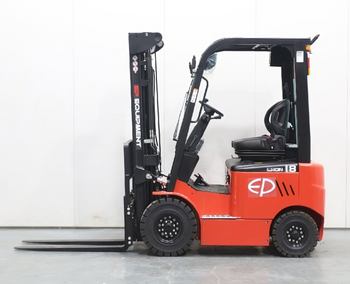


If you're specifying a lithium forklift for cold storage, the headline figures on a data sheet, such as operating temperature range, IP rating, and cycle life, are a starting point, not a guarantee. The spec sheet tells you what a battery can do under test conditions. It doesn't always tell you what happens when your truck runs three shifts in a blast freezer, moves between zones several times per hour, or gets left on a cold dock overnight.
Cold storage is one of the most demanding environments for any forklift battery, and the gap between a standard lithium-ion truck and one properly configured for low-temperature operation is significant. This guide explains what to look for beyond the headline specs, and why it matters before you sign off on a specification.
Why Cold Storage Is Different
Most warehouses operate somewhere between 15°C and 25°C. Cold storage is a different world entirely. Cold storage environments typically have temperatures ranging from -18°C to -35°C, or even lower, which can significantly affect the performance of forklifts. Fresh produce and dairy typically sit between 2°C and 8°C. Frozen food and pharmaceutical cold chain can push down to -25°C or below.
At these temperatures, the rules that apply to a standard warehouse forklift simply don't hold. Battery chemistry behaves differently, condensation becomes a serious risk, and charging logistics that work fine at ambient temperature can cause genuine damage in sub-zero conditions.
The good news is that a well-specified lithium-ion forklift handles cold storage far better than any lead-acid alternative. Lead-acid batteries automatically lose around 30% of their rated capacity when used in temperatures below freezing, meaning you have just 70% of the battery's available capacity as actual runtime right from the beginning, with the discharge and charge cycle life greatly shortened. Lithium-ion technology, and LiFePO4 chemistry in particular, is genuinely more resilient in the cold. But resilient doesn't mean immune, and not all lithium configurations are equal.

What the Spec Sheet Shows vs What You Actually Need to Know
Operating Temperature Range
Most standard lithium-ion forklifts quote an operating temperature range of around -20°C to 45°C. That figure looks reassuring. What it doesn't tell you is whether the battery can also charge at those temperatures.
The BMS will prevent charging if the core cell temperature is below freezing (typically 0°C) unless a controlled heating function is activated. This prevents lithium plating, a damaging condition that can occur if lithium ions are forced to deposit as metal on the anode during charging in the cold.
In practice, this means a standard lithium truck that "operates at -20°C" may still need to be brought to a warm charging area before it can accept a charge. A battery that operates at -20°C but must be moved to a warm room to charge defeats the entire purpose. For a busy cold store running multiple shifts, this is a serious operational problem.
The question to ask your supplier is not "what is the operating temperature?" but "at what temperature can the battery both operate and charge, without being removed from the cold zone?"
IP Rating: Why It Matters More Than You Think
IP67 is the minimum standard you should accept for any freezer environment. IP67 is the rating that matters in cold storage because of condensation. Every time a forklift moves between a freezer zone and an ambient corridor, moisture forms on every cold surface, including battery connectors, seals, and cable entries. An IP67 rating confirms the enclosure is fully sealed against this.
Many standard lithium forklifts are rated IP54 or IP55, which provides dust resistance and protection against water jets but falls short of the full immersion seal that cold storage condensation demands. Over time, moisture ingress into battery connectors and electronics causes corrosion, intermittent faults, and accelerated degradation.
If your operation involves frequent movement between temperature zones, even for a chiller running at 4°C, confirm the IP rating of both the battery and the truck's main electrical components, not just the headline figure.
Capacity Retention at Temperature
The spec sheet will quote cycle life at standard temperature, typically 25°C. What it rarely specifies is how cycle life performs at your actual operating temperature.
Lithium batteries using LiFePO4 chemistry excel in cold environments, offering an effective operating range often cited between -25°C and 55°C. While energy density may slightly decrease at the lower end of that range, the effect is far less dramatic than on lead-acid batteries. A quality LiFePO4 cell typically retains well above 90% of its capacity at -20°C, compared to lead-acid at the same temperature which can fall below 55% of rated capacity.
The practical implication: in a freezer environment, a lithium truck running on a correctly specified LiFePO4 battery with active thermal management will deliver a full shift's runtime. A standard lithium truck without cold-optimised thermal management may not.
The Three Technologies That Separate Cold-Spec from Standard Lithium
1. Active Battery Heating
A properly cold-specified lithium forklift battery includes a BMS-controlled heating system that warms cells to a safe operating and charging temperature before use. Active heating raises battery temperature from -20°C to 0°C in approximately 25 to 30 minutes. The battery management system monitors internal temperature and activates heating when needed, preventing lithium plating and capacity loss.
This is what allows a genuine cold-store lithium truck to charge inside the freezer zone, eliminating the need for a separate heated charging room and all the operational disruption that creates.
2. Passive Thermal Insulation
Alongside active heating, each battery module in a properly engineered cold storage battery is wrapped in high-grade thermal insulation material, typically polyethylene insulation cotton, which acts as a thermal barrier, slowing heat loss during operation and preventing the cells from cooling too rapidly during stationary periods. The heat generated naturally during normal discharge helps maintain cell temperature from within.
Together, active heating and passive insulation mean the battery doesn't need to work against the environment to maintain safe operating temperatures.
3. Sealed Anti-Condensation Design
Beyond IP rating, a cold-specified battery should include hermetic sealing and internal moisture management. To prevent internal condensation during temperature shifts, a properly specified LiFePO4 forklift battery is hermetically sealed, equipped with a water condensation management design, and treated with moisture-proof coatings. Some batteries also include silica desiccants within the casing to absorb any residual moisture, keeping internal components dry across repeated temperature transitions.
Opportunity Charging in Cold Storage: A Genuine Advantage
One of the most operationally significant benefits of lithium over lead-acid in cold storage is the ability to opportunity charge. A lithium battery with a smart BMS accepts partial charges at any time with no memory effect and no reduction in cycle life. In practice, a forklift can plug in during a 20 to 30 minute shift break, inside the cold zone, and return to full power immediately. No swap. No heated battery room. No lost shift time.
For lead-acid in a cold environment, this is simply not possible. Lead-acid batteries must be stored and charged at room temperature, which in a cold storage operation means pulling trucks out of the work zone, warming the battery, charging it, and returning it, a cycle that destroys multi-shift productivity and typically requires two or three spare batteries per truck to maintain coverage.
For a 24/7 cold store operation, the shift from lead-acid to a properly specified lithium forklift is one of the highest-impact changes a warehouse manager can make to operational efficiency.
What to Ask Your Supplier Before Specifying
Before committing to a lithium forklift for cold storage, run through these questions:
-
At what cell temperature does the BMS prevent charging, and does the battery include an integrated heating system to overcome this?
-
What is the IP rating of the battery and the truck's main electrical components?
-
Has cycle life been tested and validated at operating temperature, not just at 25°C?
-
Can the truck charge inside the cold zone, or does it need to be brought to an ambient area?
-
Does the battery include passive thermal insulation alongside active heating?
-
What condensation protection is built into the design?
A supplier who can answer all of these clearly is one who understands cold storage as a real operating environment, not just a line on a spec sheet.

EP Electric Forklifts in Cold Storage
iLift's EP lithium-ion electric forklifts are built around LiFePO4 battery chemistry, which provides the thermal stability and cold-temperature performance that cold chain operations demand. With a 5-year battery warranty included as standard and the option to spec cold-environment configurations for deep-freeze and chiller applications, EP equipment is well-suited to the demands of food logistics, pharmaceutical cold chain, and refrigerated distribution.
If you're specifying a forklift for a cold store or temperature-controlled environment, our team can help you work through the right configuration for your operating temperatures and shift patterns. Browse the full EP electric forklift range on iLift or contact the iLift team for a no-obligation specification conversation.
FAQ: Lithium Forklifts in Cold Storage
Can a standard lithium forklift be used in a freezer?
A standard lithium forklift can operate in a freezer for limited periods, but without cold-specific thermal management, battery performance will degrade and charging may not be possible inside the cold zone. For regular freezer operation, a cold-specified battery with active heating and IP67 protection is strongly recommended.
What temperature can lithium forklift batteries operate at?
Lithium-ion forklifts with appropriate cold-storage configuration maintain consistent performance across an operational temperature range from approximately -20°C to 45°C. Deep-freeze applications below -20°C require specialist battery configurations with enhanced thermal management.
Do lithium forklifts need a separate charging room in cold storage?
Not if the battery is properly specified for cold operation. A cold-spec lithium battery with an integrated BMS heating system can charge inside the cold zone, eliminating the need for a dedicated heated charging room and the operational disruption that comes with it.
How does condensation affect forklift batteries in cold storage?
Condensation forms whenever a cold surface meets warmer, humid air, which happens every time a forklift exits a freezer zone. Over time, moisture ingress can corrode connectors and damage electronics. An IP67-rated, hermetically sealed battery with internal moisture management eliminates this risk.
Is LiFePO4 better than other lithium chemistries for cold storage?
LiFePO4 has a significantly higher thermal runaway threshold compared to other lithium chemistries such as NMC. This inherent safety is particularly important in confined, high-value cold storage environments. The chemistry is also more stable under repeated temperature cycling, making it the preferred choice for cold chain applications.
Getting the Specification Right
A lithium forklift for cold storage is the right choice for virtually every temperature-controlled application, but the standard spec isn't always the cold-storage spec. The operating temperature range on the data sheet is a starting point. The questions that matter are whether the battery can charge in the cold zone, how condensation is managed, and whether cycle life figures reflect real operating conditions.
Get those answers right before you specify, and a lithium forklift will deliver a step change in productivity, uptime, and total operating cost for your cold storage operation.
If you need help working through the right specification for your environment, we're here to help. Whether you're comparing models, assessing your temperature zones, or simply not sure where to start, the iLift team is happy to provide whatever support you need. Get in touch with us today and we'll make sure you get the right truck for the job.